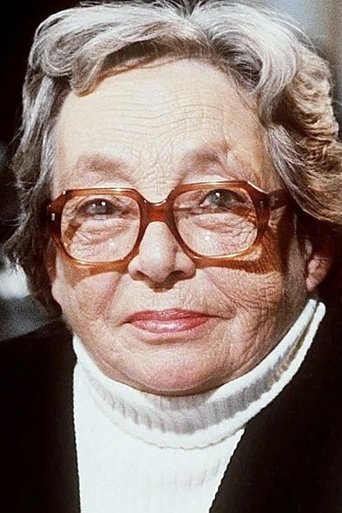
Marguerite Duras
Photoplayd Industry Rating
Not enough rated films yet to compute a weighted score.
Roles are weighted by involvement: director 1.0, screenwriter 0.7, lead 0.8, supporting 0.4, crew 0.1.
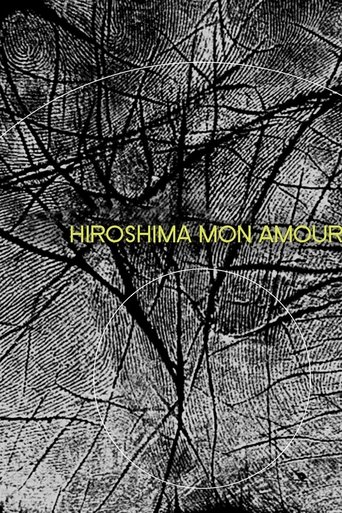
Marguerite Germaine Marie Donnadieu (4 April 1914 – 3 March 1996), known as Marguerite Duras, was a French novelist, playwright, screenwriter, essayist, and experimental filmmaker. Her script for the film Hiroshima mon amour (1959) earned her a nomination for Best Original Screenplay at the Academy Awards. Duras was born Marguerite Donnadieu on 4 April 1914, in Gia Định, Cochinchina, French Indochina (now Vietnam). Her parents, Marie (née Legrand, 1877–1956) and Henri Donnadieu (1872–1921), were teachers from France who likely had met at Gia Định High School. They both had previous marriages. Marguerite had two brothers: Pierre, the older, and the younger Paul. Duras' father fell ill and he returned to France, where he died in 1921, when Duras was seven years old. Between 1922 and 1924, the family lived in France while her mother was on administrative leave. They then moved back to French Indochina when she was posted to Phnom Penh followed by Vĩnh Long and Sa Đéc. The family struggled financially, and her mother made a bad investment in an isolated property and area of rice farmland in Prey Nob, a story which was fictionalized in Un barrage contre le Pacifique (The Sea Wall). In 1931, when she was 17, Duras and her family moved to France where she successfully passed the first part of the baccalaureate with the choice of Vietnamese as a foreign language, as she spoke it fluently. Duras returned to Saigon in late 1932 where her mother found a teaching post. There, Marguerite continued her education at the Lycée Chasseloup-Laubat and completed the second part of the baccalaureate, specializing in philosophy. In autumn 1933, Duras moved to Paris, graduating with a degree in public law in 1936. At the same time, she took classes in mathematics. She continued her education, earning a diplôme d'études supérieures (DES) in public law and, later, in political economy. After finishing her studies in 1937, she found employment with the French government at the Ministry of the Colonies. In 1939, she married the writer Robert Antelme, whom she had met during her studies. During World War II, from 1942 to 1944, Duras worked for the Vichy government in an office that allocated paper quotas to publishers and in the process operated a de facto book-censorship system. She then became an active member of the PCF (the French Communist Party) and a member of the French Resistance as a part of a small group that also included François Mitterrand, who later became President of France and remained a lifelong friend of hers. Duras' husband, Antelme, was deported to Buchenwald in 1944 for his involvement in the Resistance, and barely survived the experience (weighing on his release, according to Duras, just 38 kg, or 84 pounds). She nursed him back to health, but they divorced once he recovered. In 1943, when publishing her first novel, she began to use the surname Duras, after the town that her father came from, Duras, Lot-et-Garonne. In 1950, her mother returned to France from Indochina, wealthy from property investments and from the boarding school she had run. ... Source: Article "Marguerite Duras" from Wikipedia in English, licensed under CC-BY-SA.
Known for
Credits
Hiroshima: The Time of Return (2005)
as (voice)
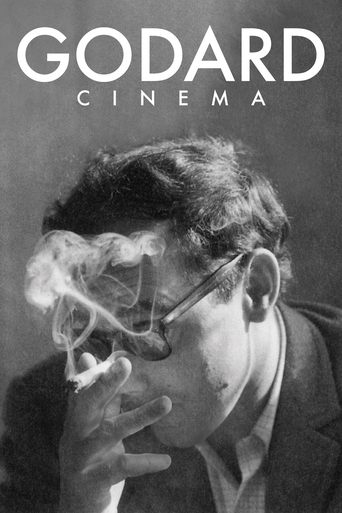
Godard Cinema (2023)
as Self (archive footage)
La TV des 70's : Quand Giscard était président (2022)
as Self (archive footage)

Little Girl Blue (2023)
as Self (archive footage)
Jeanne Moreau: Free Spirit (2018)
as Self - Writer (archive footage)
Marguerite as She Was (2003)
as Self (archive footage)
The Lorry (1977)
as elle
Delphine and Carole (2020)
as Self (archive footage)
Duras/Godard (1987)
as Self
Césarée (1978)
as Self - Narrator (voice)
India Song (1975)
as Voix Intemporelle (voice)
Marguerite Duras interviews Jeanne Moreau (1965)
as Self
Nathalie Granger (1973)
as (voice)
Pornotropic (2020)
as Self - Writer (archive footage)
Les vendredis d'Apostrophes (2015)
as Self (archive footage)

Baxter, Vera Baxter (1977)
as Narrator (voice) (uncredited)
Cygne I (1976)
as Narrator (voice)
Duras Shoots (1981)
as Self
Un metteur en ordre: Robert Bresson (1966)
as Self
Le Navire Night (1979)
as (voice)
Son nom de Venise dans Calcutta désert (1976)
Actor

Duras and Cinema (2014)
as self (archive footage)
L'affaire Matzneff (2020)
as Self (archive footage)
Mitterrand, président culturel (2021)
as Self (archive footage)
Woman of the Ganges (1974)
as Voice
Les Mains négatives (1978)
as Self - Narrator (voice)
The Colour of Words (1984)
as Self
One Minute for One Image (1983)
as Self - Narrator
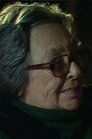
La Dame des Yvelines (1984)
as Self

Agatha and the Limitless Readings (1981)
as Narrator (voice)

Marguerite Duras (1994)
as Self
Marguerite Duras and the '68ers (1968)
as Self
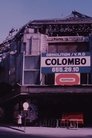
Gaumont-Palace (1976)
as Narrator (voice)

The Places of Marguerite Duras (1976)
as Self
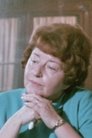
Marguerite Duras and the Prison Governess (1967)
as Self
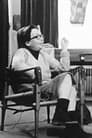
Dim Dam Dom: Marguerite Duras and Little François (1965)
as Self
Les enfants et Noël (1965)
as Self - Narrator (voice)
Marguerite Duras in the Lions' Den (1966)
as Self

Savannah Bay c’est toi (1984)
as Self
The Marguerite Duras Century (—)
as Self
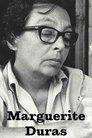
Marguerite Duras: Worn Out with Desire . . . to Write (1985)
as Self

L’homme atlantique (1981)
as Narrator (voice)
Marguerite Duras and Stripper Lolo Pigalle (1965)
as Self

Marguerite Duras, l'écriture et la vie (2021)
as Self
Aurélia Steiner (Vancouver) (1979)
as Narrator (voice)
Work and Words (1984)
as Self

Écrire (1994)
as Self
Pop Age (1966)
as Self
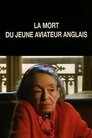
The Death of the Young English Aviator (1993)
as Self
Mulher a Mulher: Interview with Marguerite Duras by Yann Lemée (1980)
as Self